

Flash flood warnings and watches: What do they mean?
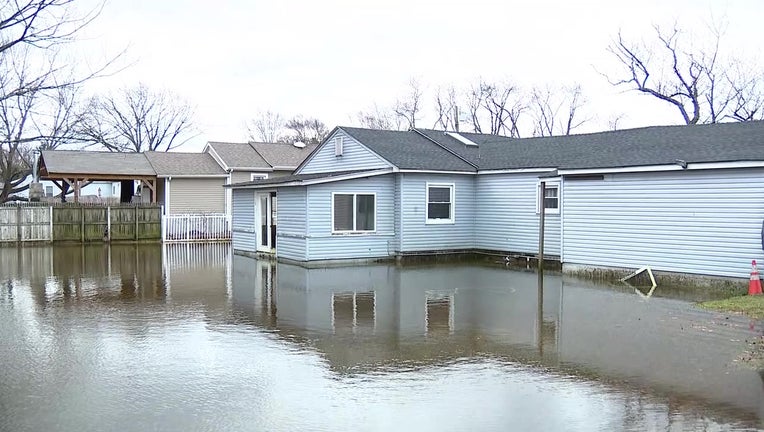
Delran flood damage.
PHILADELPHIA - Flash flood warning, flood warning, flood advisory and flood watch. These alerts tend to pop up whenever severe weather hits, but what do they actually mean?
What we know:
Many people assume a "watch" and a "warning" are interchangeable — but knowing the distinction is critical.
Watch vs. warning vs. advisory
- Warning: A flash flood warning or flood warning means it's time to take action, because the hazardous weather is imminent or already happening.
- Watch: A flood watch tells you to be prepared, because conditions are favorable for flooding to happen. A watch does not mean flooding will occur, but it is possible.
- Advisory: You should be aware if a flood advisory is issued. An advisory means that flooding is not expected to be bad enough for a warning, but may still cause significant inconvenience.
When You Shouldn’t Drive
- If your area is under a warning, don’t gamble with flash floods or falling trees. Postpone driving, if you can.
- If visibility is low, heavy rain and wind can drastically reduce visibility and reaction time.
- If water is covering the road, try to avoid driving through flooded roads. Just six inches of water can stall a car, and 12 inches can carry it away.
- If the power is out in your neighborhood, that likely means traffic lights are too. Navigating intersections can become dangerous fast.
What you can do:
What to do after driving through floodwater
- Don't start your car - Attempting to start a vehicle with water in the engine compartment could cause hydrolock and damage your engine.
- Disconnect the battery - Water mixed with electrical current could cause failure of electrical items in your vehicle.
- Roll down the windows.
- Look for a high-water mark to give you an idea of the level of damage.
- Get any residual water out of your vehicle
- Drain and refill the engine oil, transmission oil and differential fluid
- Remove spark plugs if the vehicle is in a high-water situation.
- Check your vehicle's field system, along with other fluids.
- Assess electrical damage by turning on electrical systems one-by-one.
The Source: Information from this article was provided by the National Weather Service and AutoZone.